Artwork arranged chronologically By Sen + Sonja Sonja's c.v. Sonja's Design page A tour via thumbnail images
Artwork arranged chronologically By Sen + Sonja Sonja's c.v. Sonja's Design page A tour via thumbnail images
installed
1996, 1998, 2001, 2004, 2008
Memorials (Gedenktekens),
Het Zuiderpark, The Hague, 1998.
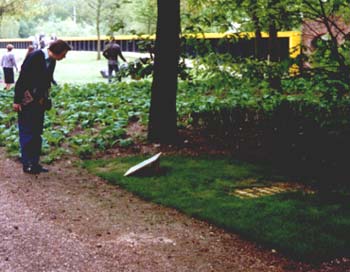
Memorials (Gedenktekens), Arcen Castle Gardens,
(KasteelTuinen Arcen), The Netherlands, 1996.
Here the text was in Dutch, English, French and German.
Our work often is concerned with art as experience, combining the conceptual with the physical. In Memorials, the viewer first encounters a plaque with the text
of a story about a feminine spirit's encounter with a garden, which ends with her leaving her clothing behind as sign of mercy (memory).
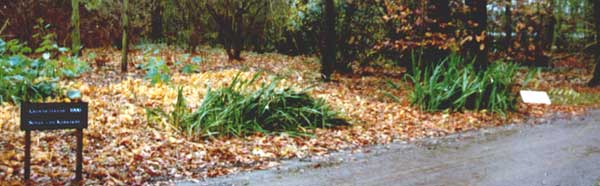 Memorials (Gedenktekens), Kasteltuinen Arcen (The Arcen Castle Gardens), 1996.
|
|
|
Introduction to the story
When I first visited the Arcen Castle Gardens I (Sonja) realised that this work would need to have a 'story' to help the visitors to relate to this work as well as to help 'fit' the work into a public context such as these gardens. Rather than serving as a bridge to connect the visitor with the ceramic tiles, the story is in fact the art and the tiles are relics. Leftovers from an act of creation. |
|
| ||||||||||||||||
The story was written in English and has been translated into the following languages.
Currently only the Dutch, German and English versions are here. Memorials a transcendent experience There was green and sunshine all around as she entered the garden. All she had to do was to concentrate on the exceptions, the particularities, and there it was full of diversity: wild and tame plants in various combinations. | 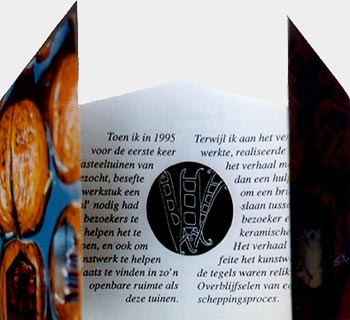 This artist book presented the story in Dutch, English, German and French. |
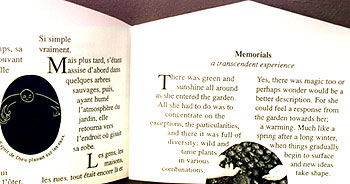
Memorials (Gedenktekens),
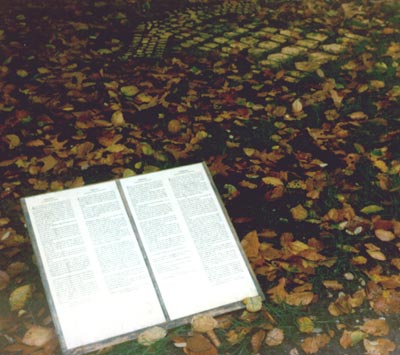
The story (and book), 1996. A page in French and one in English. |
Yes, there was magic too or perhaps wonder would be a better description. For she could feel a response from the garden towards her; a warming. Much like a spring after a long winter, when things gradually begin to surface and new ideas take shape. |
|
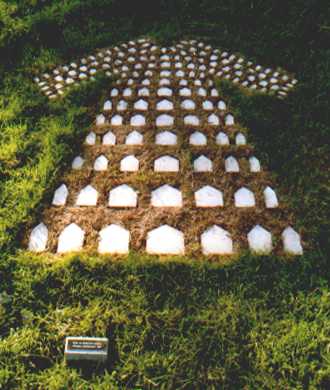
Now even her garment seemed rather plain with its rows and limitations. The garden was so inviting that she decided to take her garment off and she spread it on the ground. | 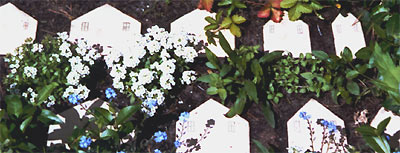 Memorials, detail of two rows of the 2001 installation.
We planted Forget-me-not plants between the tiles. By the end of the exhibition some had grown over the tiles. Below: A resident of The Hague reading the Arabic translation. |
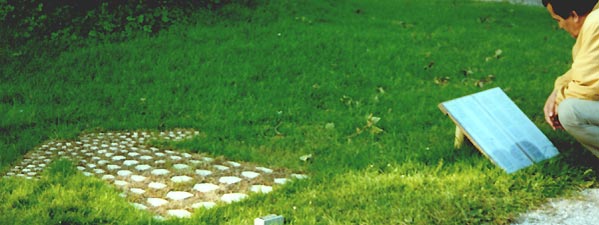 |
|
It seemed funny that it ever fitted her. It never had. It was just a vessel intended to contain her spirit, and that it could never do completely since she had always been able to look out of the windows. | 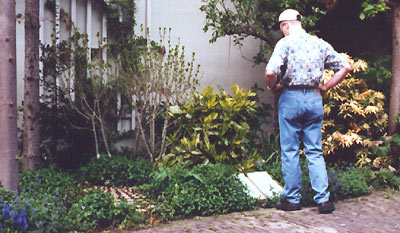 Memorials, the 2001 installation.
 |
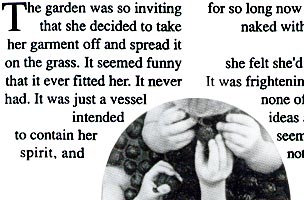
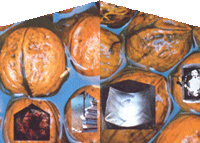
Pages of the English in the book were images of our children playing in a bath of walnuts. |
Gosh, she'd worn the thing for so long now that she felt naked without it. No, more, she felt she'd shed herself. It was frightening for her yet none of the new ideas around seemed to notice. |
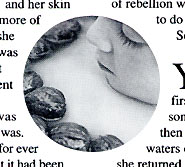 As time passed and her skin could breathe more of the garden, she realised that it was just habit that made the garment feel as if it was who she was. She felt silly for ever believing that it had been - silly for feeling frightened - silly for treating it as an act of rebellion when all she had to do was take it off. So simple really. | 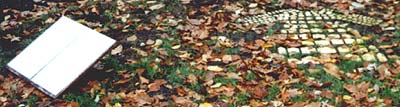 Memorials (Gedenktekens),
Kasteeltuinen Arcen
Memorials (Gedenktekens),
Kasteeltuinen Arcen (The Arcen Castle Gardens, The Netherlands), 1996. 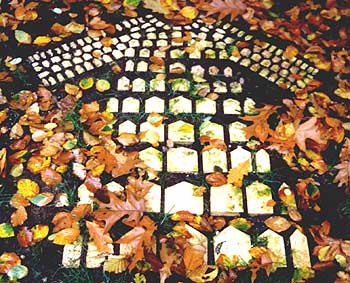 |
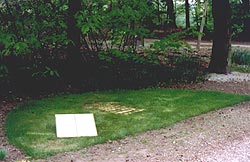
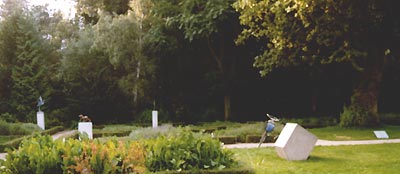 Six of the sculptures in the 1998 exhibition in the Herb Gardens
of the park, The Hague. Memorials is on the left in the photo. 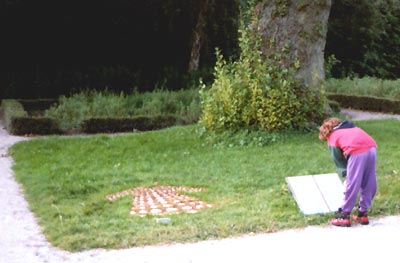 | Yet after, first sitting in some wild trees, then testing the waters of the garden, she returned to where her dress was. 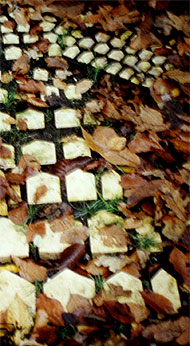 |
She felt that she owed it to history - for all the people and all the houses and all the streets still there - to leave it as a token of mercy. As a reminder of what we can wear and transcend. | 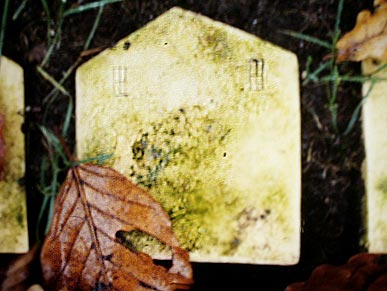
Detail towards the end of the 1996 three month installation. |
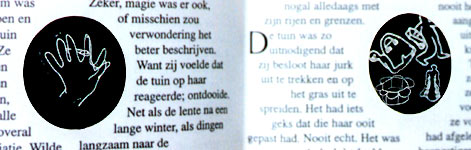 Pages of the Dutch in the book. Drawings by Sonja ( View Details ).
 ( From the Essences and Particularities Series ). |
She lay on the dress and hugged the earth that had given her a place and sank deep into its body. |
| Then she was floating up into the skies embracing her spirit. And entranced by the innermost essence of | 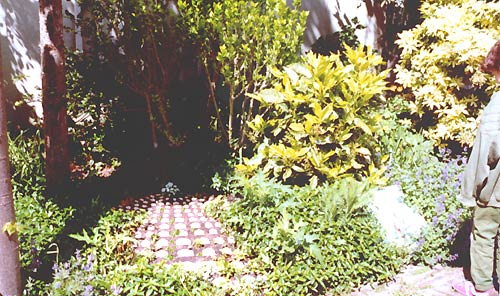 | |
|
things and the individuality of each, she chose to stay there. | 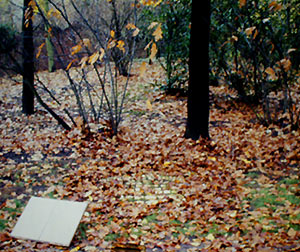 | Above: 2001 installation in a Leiden gallery courtyard.
Left: 1996 installation in the Arcen Castle Gardens. Below: 1998, with Hague Arabic-speakers and tourists from Morocco. 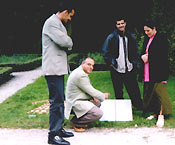 |